
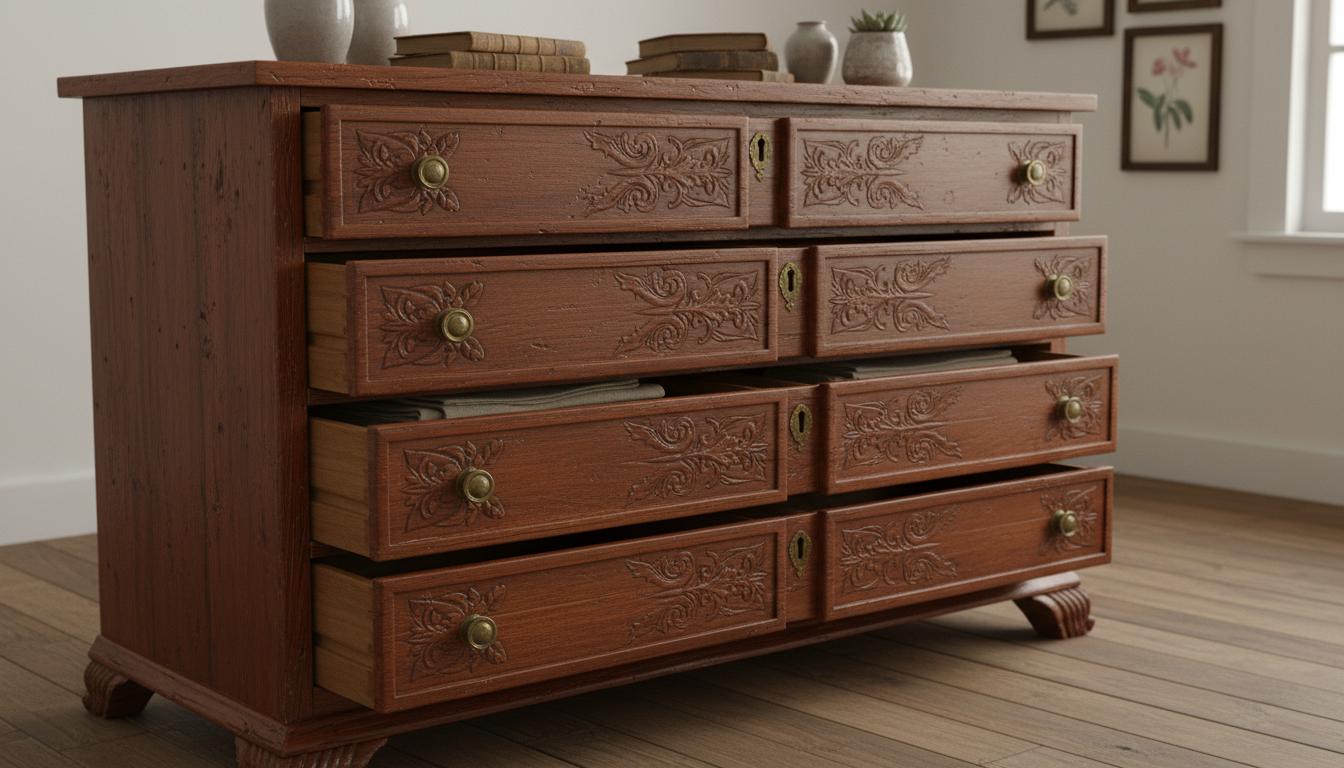
Done well, drawers save space, tame clutter, and make daily life easier. In this guide, you’ll learn what drawers are made of, how the mechanics work, which types fit Kiwi homes best, and how to choose, install, and care for them. You’ll also find practical tips for earthquake safety, damp coastal conditions, and small-space living common across Aotearoa.
What is
A drawer is a box that slides in and out of a cabinet, chest, or frame to store items. It usually has a front (the face you see), two sides, a back, a base, and a set of runners or slides that let it move smoothly. You’ll find drawers in kitchens, wardrobes, offices, bathrooms, garages, tiny homes, and baches. A chest of drawers is a free-standing unit with multiple stacked drawers; built-in cabinetry uses drawers for fast access to everyday items.
How it works
Most drawers ride on metal runners fixed to the cabinet (carcase) and the drawer box. Good hardware gives a smooth glide, keeps the drawer aligned, and carries the weight without sagging. The feel—light, soft-close, push-to-open—comes from the slide mechanism and dampers.
Slides and runners
There are several common slide types in New Zealand:
- Side-mount ball-bearing slides: Metal rails visible when the drawer is open. Durable, widely available, easy to retrofit.
- Undermount concealed slides: Hidden under the drawer. Clean look, often soft-close, precise fit required.
- Roller slides: Simple nylon wheels. Budget-friendly, lighter loads.
- Centre-mount: A single slide under the centre. Minimalist but lower weight capacity.
- Soft-close: Adds a damper that catches and closes the drawer gently.
- Push-to-open: Springs the drawer out with a light press. Often handle-free kitchens.
Drawer box and joinery
The box affects strength and lifespan. Common options:
- Dovetail or finger joints: Strong, long-lasting, often seen in quality solid-wood drawers.
- Confirmat/screw with dowels: Standard in flat-pack and cabinet-shop builds.
- Stapled with glue: Quick and cheap, best for light duty.
Materials
Typical choices in NZ include melamine-faced MDF or particleboard, plywood, and solid timber (e.g., pine or locally made pieces with sustainable hardwoods). The base panel is often thinner; upgrading the base boosts durability for heavy kitchen drawers.
Safety and stability
- Anti-tip anchors: In quake-prone New Zealand, tall units like a chest of drawers should be secured to a wall.
- Stops and catches: Prevent a drawer from being pulled out fully by mistake.
- Childproof latches: Reduce finger-pinches and climbing hazards.
Runner comparison at a glance
| Slide type | Look | Typical load rating | Motion feel | Cost | Best for | Notes |
|---|---|---|---|---|---|---|
| Side-mount ball-bearing | Visible when open | 35–45 kg (heavy-duty up to 100 kg) | Smooth, positive | Low–Medium | Kitchen, garage, wardrobe | Easy to retrofit; good for wide drawers |
| Undermount concealed | Hidden | 25–40 kg | Premium, soft-close common | Medium–High | Modern kitchens, bathrooms | Requires precise fit; usually full-extension |
| Roller | Visible wheels | 15–25 kg | Light, can rattle | Low | Bedside, light office use | Budget option; limited lifespan under load |
| Centre-mount | Mostly hidden | 15–25 kg | Moderate | Low–Medium | Traditional furniture | Less stable for wide drawers |
| Push-to-open (add-on) | Handle-free fronts | Depends on base slide | Spring-pop open | Medium | Minimalist kitchens | Can open with pets/kids bumping—consider magnetic catches |
Types / examples
Kitchen drawers
Full-extension kitchen drawers put pots, pantry goods, and utensils within reach. Soft-close drawers protect cabinetry and feel refined. Deep pan drawers and internal drawers behind doors are common in NZ kitchen designs.
Chest of drawers
A chest of drawers stores clothing and linen without eating floor space. For stability on carpet or in older villas, choose a broad base and fit anti-tip straps. In small flats, a tallboy squeezes storage into a narrow footprint.
Wardrobe and closet drawers
Shallow drawers for socks and accessories, deeper ones for jumpers. Modular systems let renters add drawers without drilling walls.
Bathroom vanity drawers
U-shaped drawers route around plumbing. Moisture-resistant materials and sealed edges are essential in steamy bathrooms.
Office and study drawers
Pedestal drawers keep stationery tidy. Lockable file drawers use heavy-duty slides for A4 or legal folders.
Garage and workshop drawers
Metal tool drawers with high load ratings and full-extension slides hold sockets and power tools. Look for powder-coated finishes and ball-bearing runners.
Under-bed and under-stairs drawers
Hidden storage for seasonal items. Low-profile slides prevent snagging carpet and rugs.
Pros and cons
Pros
- Great access: Full-extension drawers let you see and reach the back.
- Organisation: Dividers and inserts keep small items sorted.
- Space efficiency: Deep drawers replace awkward shelves.
- Child safety options: Soft-close and catches reduce slams and pinches.
- Flexible style: From rustic timber to sleek handle-free fronts.
Cons
- Cost: Quality slides and soft-close drawers add up.
- Fit tolerances: Undermount systems need precise building.
- Overloading: Exceeding weight limits causes racking and failure.
- Maintenance: Crumbs, moisture, and corrosion can affect runners over time.
How to use or choose
Step-by-step: Measure for new drawers or replacements
- Measure the cabinet opening width in millimetres (inside to inside).
- Check depth from the inside front edge to the back panel. Standard runners come in set lengths (e.g., 300, 350, 400, 450, 500, 550 mm).
- Decide slide type. For side-mount slides, allow for slide thickness on each side (often about 12–13 mm per side). For undermount, follow the maker’s spec.
- Choose height based on contents: shallow (60–120 mm) for utensils; deep (200–300 mm) for pots or linen.
- Confirm load rating. Weigh or estimate contents; add a safety margin (at least 25%).
- Select materials. In damp homes, prioritise plywood or well-sealed melamine edges.
- Order or build the drawer box to the correct internal and external dimensions for your chosen slides.
Buying tips for New Zealand homes
- Look for full-extension slides so nothing hides at the back.
- Soft-close drawers are worth it in busy family kitchens.
- On coastal sites, choose zinc-plated or stainless slides to resist rust.
- Check warranty length and spare-part availability locally.
- Test in-store: open and close several times with weight; listen for grinding or wobble.
- For heritage villas with uneven floors, prefer chests of drawers with adjustable feet and a wall anchor kit.
- Consider second-hand. Trade Me often lists quality solid-wood chests of drawers that outlast flat-pack units.
Organisation that works
- Use dividers in kitchen drawers: one zone each for knives (with a guard), utensils, and wraps.
- File-fold clothing in a chest of drawers so you see each item at a glance.
- In kid’s rooms, label fronts with icons to speed tidy-up time.
- In the garage, foam inserts stop tools sliding and protect edges.
Materials comparison
| Material | Durability | Moisture resistance | Repairability | Cost | Best use |
|---|---|---|---|---|---|
| Melamine-faced MDF/particleboard | Good if edges sealed | Moderate; edges must be banded | Hard to refinish | Low–Medium | Kitchens, wardrobes, offices |
| Plywood (birch/marine) | Very good | Good; better with clear coat | Easy to sand and seal | Medium–High | Kitchen pan drawers, bathrooms |
| Solid timber (e.g., pine, hardwood) | Excellent with proper joinery | Varies by species and finish | High; can be repaired/refinished | Medium–High | Chests of drawers, feature furniture |
Installation notes
- Cabinet must be square. Measure diagonals; they should match.
- Use a jig or spacer blocks to mount slides at the same height on both sides.
- Pre-drill to avoid swelling or splitting, especially in MDF.
- For undermount systems, follow the specific setback and notch details exactly.
Care and maintenance
- Vacuum crumbs from kitchen drawers so grit doesn’t chew the runners.
- Wipe spills quickly; standing water swells board edges.
- Lubricate ball-bearing slides lightly with a silicone-safe spray if they feel dry.
- Tighten loose handles and check screws in the slide brackets every 6–12 months.
- Respect weight limits; heavy cast-iron pans belong in a deep pan drawer with high-rated slides.
Safety in quake country
- Anchor tall chests of drawers to a stud with approved straps or brackets.
- Place heavier items in lower drawers to lower the centre of gravity.
- Use child locks if little climbers are in the house.
FAQ
What is the difference between drawers and shelves?
Drawers pull out and bring items to you; shelves stay fixed and make you reach in. For small items, drawers are faster and tidier. For tall appliances or big boxes, shelves can be better.
How much weight can drawers hold?
It depends on the slide rating and drawer build. Light-duty slides hold around 15–25 kg. Standard ball-bearing slides handle 35–45 kg. Heavy-duty sets can exceed 80–100 kg. Always check the hardware rating and distribute weight evenly.
Can I retrofit soft-close to existing drawers?
Often, yes. Replace current slides with compatible soft-close side-mount or undermount slides of the same length. You may need to adjust the drawer size for undermount systems.
Why do my drawers stick?
Common causes are swollen boards from moisture, misaligned slides, debris in runners, or racked cabinets. Dry the area, clean the slides, tighten fixings, and re-square if needed. If melamine has blown at the edges, replacement may be simplest.
Are handle-free push-to-open drawers practical?
They look clean and work well in modern kitchens. In busy homes with pets or toddlers, accidental bumps can open drawers; magnetic or mechanical latches with higher resistance help.
What size drawers are standard?
Cabinet widths commonly follow 300, 400, 450, 600, 800, and 900 mm modules. Slide lengths are typically 300–550 mm in 50 mm steps. Depth and height are set by what you plan to store and the slide you choose.
Is plywood better than melamine for drawers?
Plywood is tougher and copes better with moisture, making it ideal for heavy-use or damp areas. Melamine is affordable, consistent, and easy to clean. Both work when built and sealed properly.
Where can I buy drawers and hardware in New Zealand?
Cabinetmakers supply custom drawers and install on site. DIYers can find flat-pack drawers, slides, and organisers at major hardware chains and specialist joinery suppliers. For furniture like a chest of drawers, check local retailers and second-hand options on Trade Me.
How do I stop a chest of drawers from tipping?
Anchor it to a wall stud with anti-tip straps, keep heavy items low, and avoid opening multiple drawers at once. On carpet, adjust or add a stable base so it sits level.
What’s the easiest upgrade to make drawers feel premium?
Fit full-extension soft-close slides and add dividers. The glide improves instantly, and organisation doubles the usable space.
How can I make drawers last longer in a damp home?
Seal exposed edges, ventilate rooms, wipe condensation, and pick corrosion-resistant slides. A light coat of furniture wax on solid-wood drawers also helps.
Do I need full-extension slides?
Not always, but they’re worth it in kitchens and workspaces where access matters. Partial-extension is fine for shallow bedside or utility drawers.
Can I build a drawer myself?
Yes. With basic tools, cut panels square, use sturdy joinery, and match dimensions to your chosen slides. A pre-cut kit can speed things up if you’re new to cabinetry.
Bottom line
Choose drawers based on what you’ll store, how often you’ll use them, and the conditions in your home. Get the measurements right, pick slides with the right load rating, and anchor tall furniture. Do that, and your drawers will feel smooth, stay square, and serve you for years.