
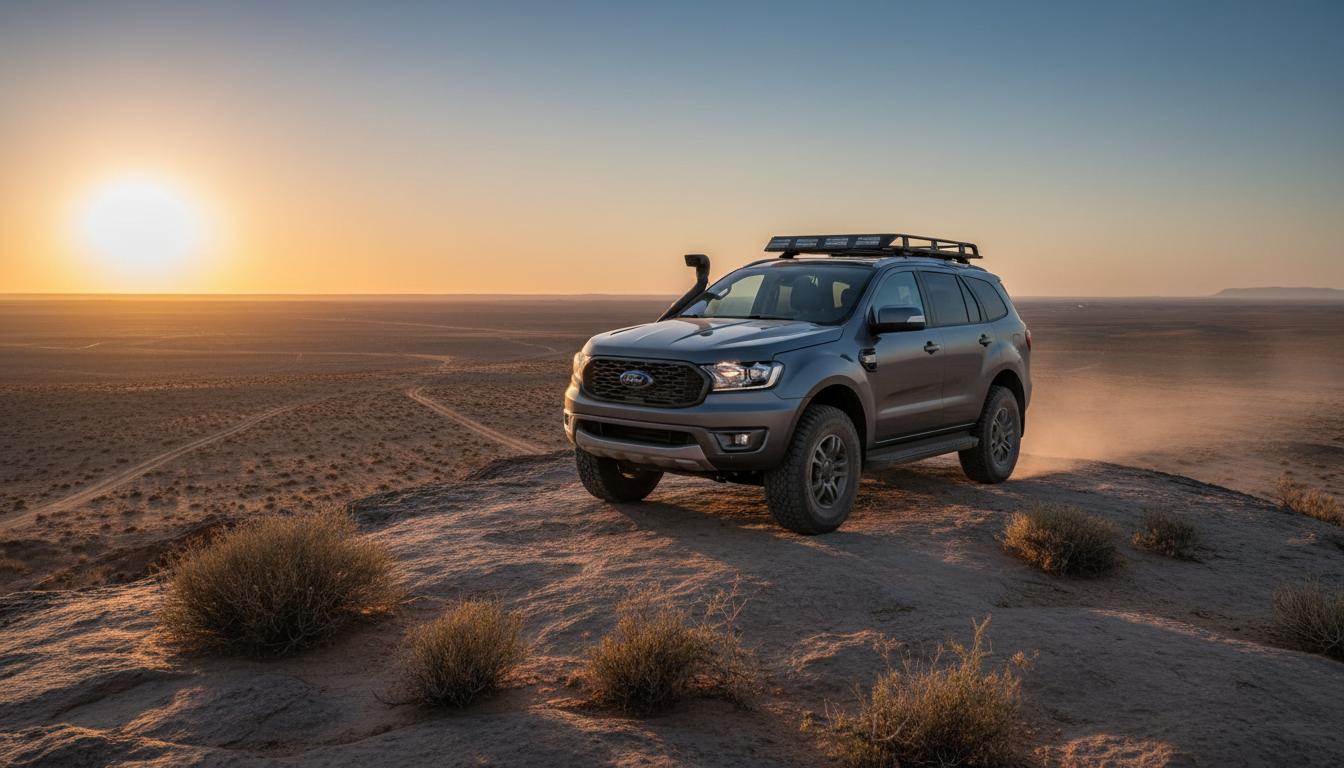
If you need one vehicle that can tackle school runs, haul a boat to the ramp, and survive a weekend on rutted gravel, the ford everest is built for exactly that mix. This guide breaks down what it is, how it works, the trims you’ll see in New Zealand, real strengths and trade-offs, and how to choose the right one for your life here.
What is
The Ford Everest is a seven-seat, ladder‑frame SUV derived from the Ranger ute. That platform gives it real 4WD hardware and a towing focus, while the cabin comes dressed for family duty with modern infotainment, driver‑assistance tech, and flexible seating. In New Zealand, it’s popular with families who head off the beaten track, tradies who tow heavy loads, and anyone who wants the security of a proper low‑range 4WD without giving up day‑to‑day comfort.
Key points at a glance:
- Seven seats with fold‑flat third row for cargo flexibility
- Strong turbo‑diesel engines matched to a 10‑speed automatic
- Selectable 4WD with low range and an available rear diff lock
- Impressive towing capacity (up to 3,500 kg braked)
- Modern safety features and a big, intuitive touchscreen
How it works
Under the skin, the Everest is a body‑on‑frame SUV. That means a robust steel ladder frame under the body, which helps with durability and towing. Compared with soft‑roaders (monocoque crossovers), it’s heavier but tougher when the going gets rough.
Powertrain and driveline
- Turbo‑diesel engines: Typically a 2.0‑litre bi‑turbo four‑cylinder focused on efficiency and a 3.0‑litre V6 for effortless towing and highway overtakes.
- 10‑speed automatic: Keeps the engine in its torque band and settles revs at cruising speed. Smooth, quick shifts help on hills and with a trailer.
- 4WD system: Selectable modes (such as Normal, Eco, Tow/Haul, Slippery, Mud/Ruts, Sand) tailor throttle, transmission, and traction control. A two‑speed transfer case provides low range for slow, technical terrain.
- Traction aids: Rear diff lock (on many variants) for maximum drive on uneven surfaces; hill descent control to creep safely down steep tracks.
Chassis and suspension
- Independent front suspension and a coil‑spring live rear axle balance ride comfort with load‑carrying stability.
- Ground clearance and underbody protection suit gravel, farm tracks, and rocky creek crossings common in rural NZ.
Driver assistance and towing tech
- Adaptive cruise control, lane keeping aids, blind‑spot monitoring (often with trailer coverage), and autonomous emergency braking help on long trips.
- Trailer Sway Control and Tow/Haul mode steady the rig and tweak shift points when you’re hitched up.
- Big central touchscreen with Ford’s SYNC system, wireless Apple CarPlay and Android Auto, and available 360‑degree camera to line up the towball or dodge rocks.
For New Zealand use, the combination works: relaxed on SH1, planted on the Desert Road in a crosswind, and composed crawling to a DOC campsite after rain.
Types / examples
In New Zealand you’ll most commonly see three trims. Names and exact spec can change, but this table gives you the gist of how the Ford Everest range typically stacks up here.
| Trim | Engine | Drivetrain | Seats | Towing (braked) | Key features |
|---|---|---|---|---|---|
| Trend | 2.0L Bi‑Turbo diesel | 4WD, 10‑speed auto | 7 | Up to 3,500 kg | Large touchscreen with SYNC, wireless CarPlay/Android Auto, advanced safety suite, cloth or durable trim |
| Sport | 3.0L V6 Turbo‑diesel (commonly) | 4WD, 10‑speed auto | 7 | Up to 3,500 kg | Black exterior accents, leather‑accented seats, selectable drive modes, often 360‑camera and upgraded wheels |
| Platinum | 3.0L V6 Turbo‑diesel | 4WD, 10‑speed auto | 7 | Up to 3,500 kg | Matrix LED headlights, premium audio, larger digital cluster, ventilated front seats, advanced parking assist |
Examples of use in NZ
- Family tourer: Seven seats for the weekday shuffle, then fold the third row for chilly bins and tramping packs.
- Tow vehicle: Boats, horse floats, and caravans up to 3.5 tonnes, with stable manners on hilly coastal highways.
- Adventure rig: Beach launches, gravel switchbacks in the high country, and muddy paddocks after a downpour.
If you’re cross‑shopping, common alternatives in New Zealand include Toyota Prado, Isuzu MU‑X, Mitsubishi Pajero Sport, and increasingly, hybrid‑leaning large crossovers if you don’t need low range.
Pros and cons
Pros
- Serious 4WD hardware with low range and strong underpinnings
- Confident towing up to 3,500 kg and composed long‑distance ride
- Roomy, practical cabin with modern tech and thoughtful storage
- Driver‑assistance features reduce fatigue on long hauls
- Good parts availability and dealer network across NZ
Cons
- Heavier and thirstier than a soft‑roader when used purely in town
- Diesel ownership includes Road User Charges (RUC) in NZ
- Third row is best for kids or shorter adults on longer trips
- Big footprint can be a squeeze in older city car parks
How to use or choose
Step‑by‑step: Choosing the right Ford Everest for New Zealand
- List your real needs: passengers most days? Regular towing? Off‑road plans beyond gravel and light sand?
- Pick your engine: the 2.0 bi‑turbo is efficient for mixed use; the 3.0 V6 makes towing and hills feel easy.
- Decide on trim: Trend for value, Sport for style and power, Platinum for luxury and tech. Map features to needs, not wants.
- Check tow setup: confirm towbar rating, trailer plug type, brake controller requirements, and tow mirrors.
- Test drive in context: a motorway run, a steep hill start, and a rough road. If you’ll tow, bring your trailer to a dealer test if possible.
- Run the numbers: factor diesel cost, Road User Charges (RUC), insurance, tyres, servicing, and any accessories (roof racks, cargo barriers, all‑terrain tyres).
- Confirm safety tech: make sure the exact vehicle has the features you want (360‑camera, blind‑spot with trailer coverage, matrix headlights).
- Check warranty and servicing: review intervals, coverage, and roadside assistance with a New Zealand dealer.
Using your Everest well in NZ conditions
- Beach and sand: Lower tyre pressures modestly for flotation, disable traction aids if they bog momentum, and know the tides. Rinse the underbody after salt exposure.
- Gravel and corrugations: Engage the appropriate drive mode, keep speeds sensible, and let the suspension work. All‑terrain tyres make a big difference.
- Towing: Balance the load, aim for 10% ball weight where appropriate, and observe NZ towing speed limits (often 90 km/h with a trailer; confirm with NZTA).
- Water crossings: Check depth and current first. The Everest’s wading capability is generous, but go slow and steady and avoid bow waves. Never enter fast‑moving water.
- Maintenance: Stick to the service schedule, rotate tyres, and inspect brakes more frequently if you tow or drive off‑road often.
Ownership tips specific to New Zealand
- Road User Charges: Diesel vehicles pay RUC by distance. Log your kilometres and keep your RUC up to date to avoid penalties.
- Fuel planning: Rural journeys can mean long gaps between stations. Keep a buffer, especially when towing into headwinds.
- Accessories: Consider rated recovery points, a quality towbar, rubber floor mats, a cargo liner, and roof rails. Bull bars or snorkels should be ADR/NZS‑compliant and professionally fitted.
- Seasonal prep: Snow chains for alpine trips, and a quick pre‑trip check (fluids, tyre pressures, spare) before long holiday hauls.
FAQ
Is the Ford Everest a real 4WD or just an SUV?
It’s a body‑on‑frame SUV with a two‑speed transfer case and available rear diff lock. That makes it a genuine 4WD, not just a soft‑roader.
How many people can the Ford Everest seat?
Seven. The third row folds flat when you need cargo space instead.
What is the towing capacity?
Up to 3,500 kg braked, subject to variant, towbar rating, payload, and local regulations.
Which engine should I choose for New Zealand?
The 2.0 bi‑turbo suits mixed urban and highway use. The 3.0 V6 diesel is the pick for frequent towing, steep terrain, or fully loaded family trips.
What fuel does the Ford Everest use?
Diesel. In New Zealand that also means paying Road User Charges (RUC) in addition to fuel.
Does it have Apple CarPlay and Android Auto?
Yes. The latest SYNC system supports wireless Apple CarPlay and Android Auto on most trims.
Is the Ford Everest safe?
It offers a comprehensive driver‑assistance suite, multiple airbags, and strong crash performance. Confirm the ANCAP rating and features for your exact variant and year.
What’s the wading depth?
Up to around 800 mm on many current models. Always check your specific vehicle’s rating and conditions before crossing.
How does it compare to a Toyota Prado or Isuzu MU‑X?
All are capable ladder‑frame 4WDs. The Everest leans modern inside with a large touchscreen and punchy diesels, while Prado is renowned for long‑term durability and MU‑X for value. Drive them back‑to‑back on the same route.
What should I know before towing in NZ?
Set up an appropriate towbar and brake controller, balance your load, check the trailer’s WOF and rego, and follow NZTA guidance on weights and speed limits. Practise reversing and braking distances before a big trip.
Any hidden costs to budget for?
Beyond purchase price: diesel, RUC, insurance, tyres (especially if you choose all‑terrains), servicing, and accessories. Towing and off‑road use can increase wear.
Can I take my Ford Everest off‑road stock?
Yes, for moderate terrain. For tougher tracks, consider all‑terrain tyres, recovery points, a compressor, and basic recovery gear, and travel with a buddy vehicle.
What’s the service interval?
Intervals vary by engine and year. Check the owner’s manual and follow Ford New Zealand’s schedule to preserve warranty coverage.
Is the ford everest comfortable for long trips?
Yes. Supportive seats, quiet cruising, and adaptive cruise control make it an easy long‑distance tourer, especially with the V6 diesel’s relaxed torque.