
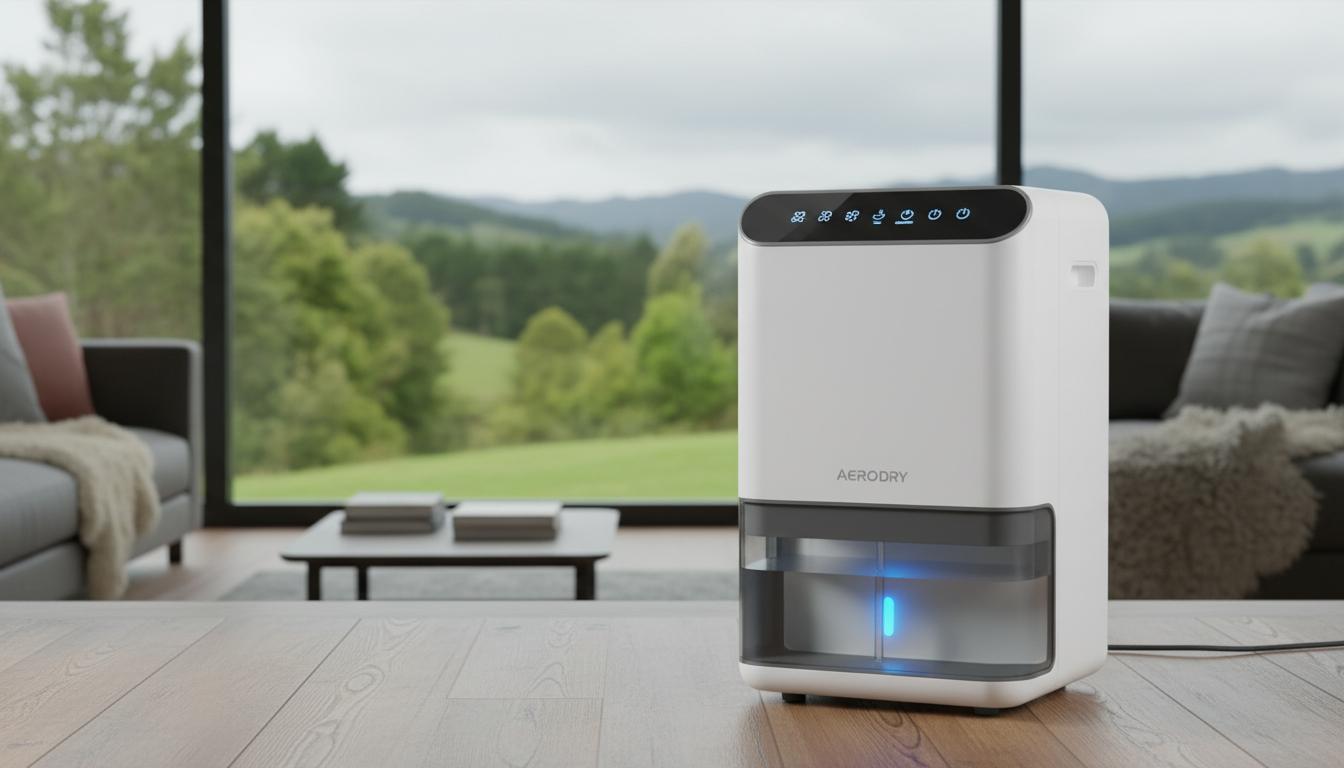
Condensation on the windows. Musty cupboards. Towels that never quite dry. If that sounds familiar, you are not alone. New Zealand’s mix of coastal air, cool winters, and older housing stock makes indoor moisture a year-round battle. A well-chosen dehumidifier can turn that around. This guide explains what a dehumidifier is, how it works, the types you’ll see in NZ stores, how to pick the right one, and how to use it for real results.
What is
A dehumidifier is a household appliance that removes excess moisture from indoor air. The goal is to keep relative humidity in a healthy band—typically around 45–55%. At this level, you reduce mould growth, protect furniture and electronics, cut window condensation, and make rooms feel warmer without cranking the heater.
In a New Zealand context, a dehumidifier helps with:
- Winter damp in bedrooms and living areas, especially in older or poorly ventilated homes
- Everyday steam from showers, cooking, and drying laundry indoors
- Coastal humidity and rainy spells that linger for days
- Protecting holiday homes, garages, and storage spaces
Important note: a dehumidifier nz solution supports, but does not replace, good ventilation and fixing leaks. If water is getting in from outside, address that first.
How it works
Core idea
Dehumidifiers pull in moist air, remove water from it, and push drier air back into the room. The collected water drips into a tank or flows out through a drain hose.
Main technologies
- Compressor (refrigerant) dehumidifiers: Air passes over cold coils. Moisture condenses into water droplets, like dew on a cold drink. Efficient in warmer conditions (roughly 15–35°C).
- Desiccant dehumidifiers: Air is drawn through a moisture-absorbing material (a desiccant wheel). They work well in cooler rooms (even below 10°C), but typically use more power.
- Hybrid or smart systems: Combine or optimise both approaches, or pair dehumidifying with air filtration.
Key features that matter
- Humidistat: Lets you set a target humidity. The unit cycles on/off to maintain it.
- Auto-defrost: Prevents ice build-up on coils in cooler rooms.
- Laundry mode: Faster moisture removal for indoor clothes drying.
- Continuous drain: Avoids emptying the tank; handy for long runs.
- Filter: Captures dust; some models add carbon or HEPA-style filtration.
- Noise and heat: All dehumidifiers add a little warmth and have fan noise; specs vary widely.
Types / examples
Different New Zealand homes need different approaches. Here’s how the main types stack up.
| Type | Best for NZ conditions | Typical capacity (L/day) | Works well at low temps? | Noise level | Pros | Cons |
|---|---|---|---|---|---|---|
| Compressor (refrigerant) | General use in heated living areas; Auckland to Christchurch | 10–30 | Fair (less effective below ~10–12°C) | Moderate | Energy-efficient in warmer rooms; larger capacities available | Performance drops in cold spaces |
| Desiccant | Colder rooms, garages, Southern regions, winter nights | 6–12 (effective even when cold) | Excellent | Low to moderate | Steady performance in the cold; often lighter | Generally higher power draw |
| Hybrid / smart | Year-round use, mixed climates, energy-conscious users | 10–20 | Good | Moderate | Balances efficiency and performance across seasons | Higher upfront cost |
| Whole-home (ducted) | Large homes, renovations, severe moisture issues | 20–60+ | Good | Low (remote) | Even humidity control; out of sight | Professional install; higher cost |
Capacity and real-world performance
Manufacturers often quote extraction rates at warm, humid lab conditions (for example, 30°C/80% RH). In a typical NZ winter room—cooler and less humid—the actual litres per day will be lower. Focus on the size of the space, the climate, and user reviews from similar homes rather than the headline number alone.
Where each type shines
- Apartment or townhouse with light condensation: Small to mid-size compressor unit with auto mode.
- Cold downstairs room or sleepout in Dunedin or Invercargill: Desiccant unit to keep performance steady.
- Family home drying washing indoors: Mid to large compressor with laundry/turbo mode and a timer.
- Damp garage, boat shed, or bach: Desiccant or robust compressor unit with continuous drain.
Pros and cons
Benefits
- Less mould and mildew: Drier air slows spore growth and musty smells.
- Warmer-feeling rooms: Dry air feels more comfortable at the same temperature.
- Protects your stuff: Furniture, books, instruments, and electronics last longer.
- Faster clothes drying: Cuts moisture produced by indoor racks.
- Health gains: Reduces dust mites and damp-related irritants.
Trade-offs
- Running cost: Power use varies by model, setting, and room conditions.
- Noise: Fans and compressors make sound; bedroom placement needs care.
- Heat output: Adds gentle warmth, which is good in winter, less welcome in a hot spell.
- Maintenance: Filters and tanks need attention; hoses must be correctly routed.
How to use or choose
Choosing the right dehumidifier for NZ homes
Match the unit to your climate, room size, and moisture level. Use this simple path:
- Define the space: Measure the room in square metres (and note ceiling height). Larger spaces need more capacity.
- Assess the climate: Colder South Island rooms or unheated spaces lean toward desiccant. Warm, lived-in areas favour compressor units.
- Gauge the problem: Daily condensation and musty odour suggest a medium-to-heavy duty model. Light damp can use a smaller unit.
- Check features: Look for a humidistat, timer, laundry mode, continuous drain, and auto-restart after power cuts.
- Consider noise: If it will run overnight near bedrooms, aim for lower dB ratings and multiple fan speeds.
- Plan drainage: If the unit will run for long hours, set up a drain to a sink or external outlet to avoid tank trips.
- Compare energy use: Check wattage and real-world user feedback from NZ conditions, not just lab specs.
Quick capacity guide
- Small rooms (bedroom/home office up to ~15 m²): 8–12 L/day class
- Medium rooms (living/dining 15–30 m²): 12–20 L/day class
- Large spaces or whole floor (30 m²+): 20–30 L/day class or multiple units
These are starting points. Cold rooms and high-moisture loads need more capacity.
Setting up and using a dehumidifier nz effectively
- Place it right: Central in the room, away from walls and curtains (at least a hand’s width for airflow).
- Close windows and doors: Let the unit dry the air you have, not the whole street.
- Set the target: Aim for 50% RH. Increase or decrease slightly based on comfort.
- Run smart: Use continuous mode on very damp days; switch to auto once under control.
- Dry laundry: Position the unit near racks; use laundry/turbo mode and a timer.
- Drain or empty: Fit a drain hose if possible; otherwise, empty the tank before it’s full.
- Maintain: Clean the filter monthly and wipe the tank to prevent biofilm.
Running costs and noise
- Power use: To estimate cost, multiply the unit’s wattage by hours used, then by your electricity rate per kWh from your bill.
- Example: A 300 W unit running 4 hours uses about 1.2 kWh. Multiply by your tariff for cost per day.
- Noise: Look for 35–45 dB for quiet modes and 45–50+ dB for high fan or laundry modes. Bedroom use calls for the lower end.
Features worth paying for in NZ
- Accurate humidistat with digital display
- Auto-defrost and cold-weather performance data
- Multiple fan speeds and sleep mode
- Continuous drain kit with adequate hose length
- Auto-restart after power cuts (handy in storms)
- Washable pre-filter; optional carbon/HEPA-style filter
- Castors and handles for moving between rooms
Placement tips by room
- Bedroom: Quiet mode, timer to stop before sleep if noise-sensitive.
- Bathroom: Use outside of splash zones; run after showers with the door ajar.
- Kitchen/living: Centre placement; combine with rangehood use during cooking.
- Garage/sleepout: Choose a model that copes with low temperatures; ensure safe drainage.
FAQ
What humidity level should I aim for in New Zealand?
Keep indoor humidity around 45–55%. Below 40% can feel too dry, and above 60% encourages mould and dust mites. Many dehumidifiers show live RH so you can fine-tune.
What size dehumidifier do I need?
Match capacity to room size and dampness. A small bedroom might manage with 8–12 L/day, while a big living room or laundry days call for 16–25 L/day. If your home is very cold in winter, choose a desiccant or a compressor unit that’s known to perform at lower temperatures.
Is a dehumidifier better than opening windows?
Use both, depending on conditions. Ventilation is great when outdoor air is drier than indoor air. On cold, wet, or still days, a dehumidifier nz option keeps moisture under control without losing heat. In practice, ventilate when you can and dehumidify when you can’t.
Will a dehumidifier heat my house?
It adds a small amount of warmth as a byproduct. It will not replace a heater, but drier air feels more comfortable and helps your main heating work better.
Can I dry clothes indoors with a dehumidifier?
Yes. Place it near the rack, close doors and windows, and use laundry mode. Clothes dry faster and the moisture goes into the tank instead of your walls and windows.
How loud are they?
Quiet modes can be in the mid-30s dB, while high fan speeds push into the 40s or 50s dB. Check specs and reviews, especially if it will run at night near bedrooms.
Do dehumidifiers remove existing mould?
No. They help prevent new growth by keeping humidity down. Clean visible mould safely, fix moisture sources, then maintain humidity around 50% to keep it at bay.
Should I run a dehumidifier in summer?
In humid regions or during rainy spells, yes. In hot, dry weather, you won’t need it. Many people in northern NZ run theirs after storms or in prolonged humidity.
What about filters and air quality?
Most units include a basic dust filter to protect the machine. Some add better filtration to capture finer particles or odours. These don’t replace a dedicated air purifier but can improve general air freshness.
Is continuous drainage worth it?
If you run the unit daily or plan to dry laundry often, continuous drain is convenient. Make sure the hose has a downhill path to a drain or sink, or use a condensate pump if needed.
Where can I use a dehumidifier nz product safely?
Indoors on a stable, level surface, away from water splashes and heat sources. Follow the manual for bathroom or laundry use, and keep clear airflow around the unit.
How long should I run it each day?
Until you reach your target humidity. Many homes need a few hours per day in winter, more during laundry drying, and little to none in settled fine weather. Auto mode with a 50% set-point keeps it simple.
Compressor vs desiccant: which is cheaper to run?
In warm rooms, compressor models generally use less power for the same moisture removal. In cold rooms, desiccants maintain performance and may be more effective despite higher wattage. Choose based on your space temperature.
Any maintenance tips for NZ conditions?
- Clean the filter monthly (more often if you have pets or run laundry mode a lot).
- Rinse and dry the tank regularly to prevent slime build-up.
- Check the drain hose routing after moving the unit.
- Vacuum intake grilles to keep airflow strong.
Final thoughts
In a country where wet winters and salty air are part of the deal, the right dehumidifier nz choice makes everyday living more comfortable—and healthier. Pick a type that suits your climate and room temperature, size it to the space, and use its smart features to keep humidity steady. Do that, and those foggy windows and musty corners will quickly become a memory.