
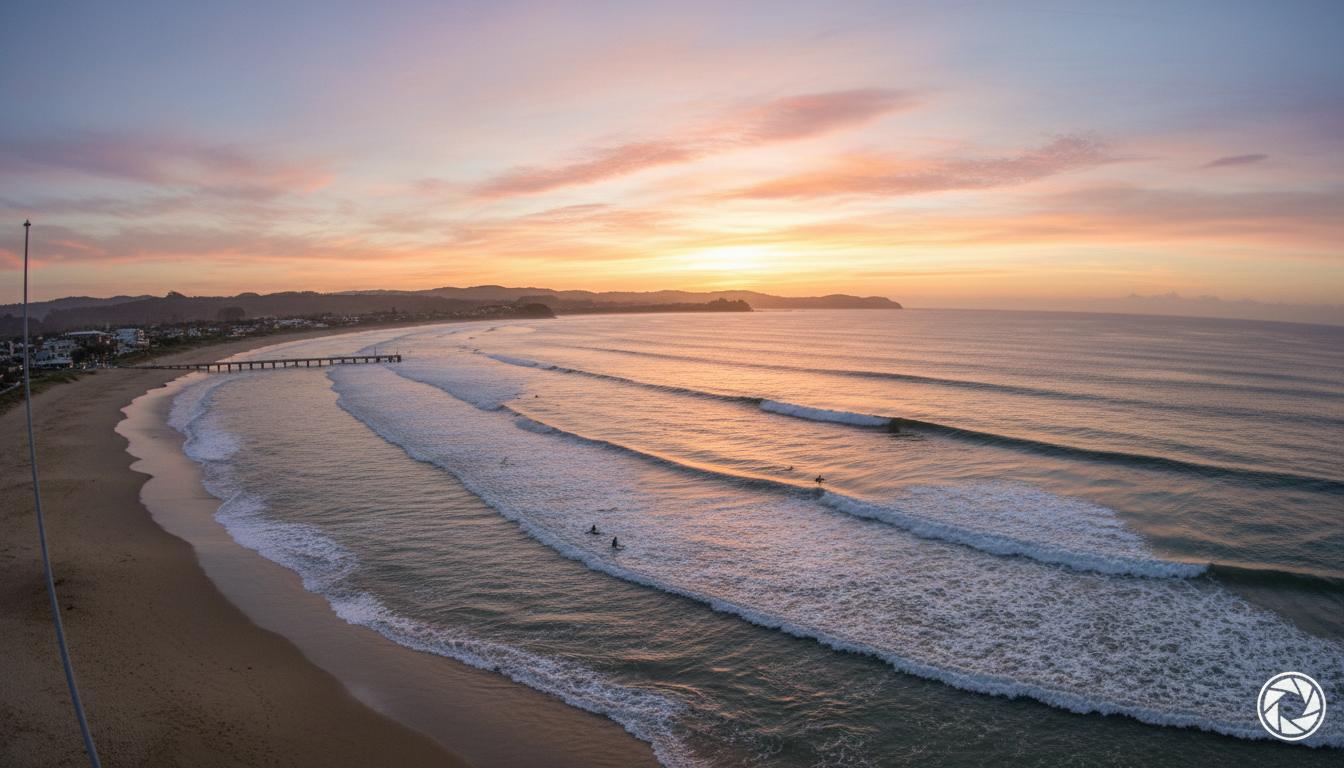
If you surf, paddle, or swim on Auckland’s Hibiscus Coast, a reliable orewa surf cam can save you a wasted drive and help you pick the right window. This guide explains what a surf cam is, how it works, the different types you’ll come across, and how to use one alongside local forecasts to read Orewa Beach conditions with confidence.
What is
An orewa surf cam is a live video stream showing current conditions at Orewa Beach. It lets you see the shorebreak, sandbanks, crowd levels, wind on the water, tide height at the rocks, and even parking availability—without leaving home. While availability of a dedicated Orewa Beach surf cam can change over time, many Kiwis use regional live surf cams or general webcams pointed at the beach to make a quick call.
In simple terms, a surf cam answers three questions fast:
- Is it breaking? Look for clean lines, not wind-chopped whitecaps.
- Is it busy? Count heads in the lineup and swimmers between the flags.
- Is it worth going now? Cross-check what you see with tide, wind, and swell direction.
How it works
A typical orewa surf cam setup blends weatherproof hardware and streaming software:
- Camera and lens: A fixed, weather-sealed HD camera mounted high on a building or club tower to capture a wide view of the beach and banks.
- Network: Broadband or 4G/5G uplink to push video to a hosting platform. Adaptive bitrate keeps the stream watchable on mobile data.
- Encoding: The camera or a small encoder compresses footage (usually H.264/H.265) to balance clarity with bandwidth.
- Hosting and playback: A website or app serves the stream, often with time stamps, snapshots, and sometimes time-lapse reels.
- Maintenance: Regular lens cleaning, re-aiming after storms, and power checks to keep the view sharp and reliable.
What you see is close to live, but there may be a 5–60 second delay depending on platform settings. Dawn and dusk performance varies: some cams have low-light sensors; others look grainy until the sun is up. On bright summer mornings, glare can blow out the image—tilt your screen, reduce brightness, or revisit when the sun angle improves.
Types / examples
Not every beach has a permanent surf cam year-round. When a dedicated orewa surf cam isn’t available, many locals check a mix of sources:
- Public surf cams: Region-wide platforms sometimes feature east coast Auckland beaches when coverage is available.
- Club or council webcams: Surf Life Saving clubs, community groups, or council-backed cameras may show the beach for safety and general viewing.
- Business-hosted cams: Cafés, hotels, or beachfront apartments occasionally share a public feed pointed at the shoreline.
- Community snapshots and streams: Local pages may post morning photos or short live videos after sunrise.
- Nearby alternatives: When Orewa isn’t covered, folks often check cams (if available) for east coast spots around the Hauraki Gulf such as Omaha, Te Arai, or Mangawhai to gauge regional wind and swell trends.
Because coverage changes, it pays to bookmark a few sources and rotate through them. The goal is a quick, honest look at the sea before you commit to the motorway.
Pros and cons
- Pros
- Saves time and fuel by avoiding flat or blown-out sessions.
- Shows real crowd levels—useful on sunny weekends and school holidays.
- Helps beginners decide if it’s mellow enough for a lesson or SUP cruise.
- Useful for swell windows: onshore vs offshore, tide push, and bank shape.
- Cons
- Coverage can be patchy; some days the orewa surf cam may be offline.
- Angles can mislead—telephoto compression may make waves look bigger or closer than they are.
- Glare, rain, or sea spray can obscure the lens and hide conditions.
- Small east-coast shifts happen fast; what looks clean on cam can change by the time you arrive.
How to use or choose
Quick method: read the orewa surf cam like a local
- Open the orewa surf cam and set the quality to the highest your data allows.
- Scan the horizon for visible lines. East-northeast swell shows as longer, orderly lines; wind swell looks bumpy and short-period.
- Check flags and trees for wind direction. Northerlies often texture the face; light offshore can groom it early.
- Watch three full sets. Count seconds between peaks to estimate period—longer pauses usually mean better shape.
- Note tide clues. Water lapping high on the sea wall or rocks signals higher tide; exposed sand near the creek mouth suggests low.
- Cross-check with a forecast (swell height, period, direction; wind speed/direction; tide chart).
- Decide your craft: longboard or log for knee- to waist-high, fish for peaky wind swell, or a SUP on calmer days.
- Commit or pivot. If Orewa looks too small, consider other east coast beaches with better exposure to the current swell direction.
What to look for when choosing a surf cam
- Angle and elevation: A slightly oblique, high vantage shows sandbanks and rips more clearly than a straight-on horizon shot.
- Update speed: Near-live video (not a 5-minute snapshot) is best for short-period east-coast swell.
- Low-light clarity: Dawn sessions are gold in summer—pick cams with decent early light performance.
- Mobile performance: Smooth playback on 4G/5G saves frustration in the carpark.
- Reliability: Fewer outages and regular maintenance matter, especially in salt-heavy onshore days.
Compare common NZ tools you’ll use with a surf cam
| Platform | Coverage near Orewa | Forecast integration | Cost | Best for | Watch-outs |
|---|---|---|---|---|---|
| Surf cam platforms (regional) | Varies by season and partners; some east-coast cams appear intermittently | Often bundled with basic swell/wind/tide panels | Freemium | Quick live glance before driving | Cam availability can change; occasional ads or lower resolution on free tier |
| SwellMap | Hauraki Gulf and Auckland coastal models | Detailed wind, swell, period, and tide forecasts | Free | Planning by hour and comparing spots | Model output, not a camera—verify with a live view when possible |
| MetService Marine/Coastal | Official warnings, wind, and coastal outlooks | Text and charts; rain radar nearby | Free | Safety checks and weather confidence | Less spot-specific wave detail than surf sites |
| Windy | Global models with fine Auckland resolution | Multiple models, wind/swell overlays, gusts | Free/Freemium | Wind timing for offshore/onshore shifts | Choose the right model; east-coast chop can be under-read |
| Community pages (local) | Orewa and Hibiscus Coast groups | Morning photos, tide and hazard notes | Free | Real-world snapshots and beach updates | Inconsistent timing; subjective takes |
Local tips for reading Orewa Beach on cam
- Swell direction matters: Orewa lights up more with E–NE pulses than straight south. Short-period northerlies bring peaky, weaker surf.
- Sea breezes: Summer afternoons often go onshore. Early is your friend if you want cleaner faces.
- Tide sensitivity: Banks can fatten on higher tides. Look for mid-tide pushes when small swell needs help.
- Longboard friendly: Many Orewa days suit logs and foamies. If you only see shorebreak closeouts on cam, bring volume or pivot to a more exposed beach.
- Safety first: Patrols are seasonal. Always respect flags and give lifeguards space. Rips form near banks and creek mouths even on small days.
FAQ
Is there a dedicated orewa surf cam right now?
Availability changes. Sometimes a public orewa surf cam or general webcam points at the beach; other times you’ll rely on nearby cams and forecasts. Keep a few trusted bookmarks and check community pages for current links.
Can I trust a surf cam more than a forecast?
Use both. The orewa surf cam shows what’s breaking now. A forecast explains why and what may happen next. Together they help you time the best window.
Why does the cam make waves look bigger or smaller?
Lens choice and angle. Telephoto lenses compress distance and exaggerate size; wide angles can shrink it. Watch a known object—a person waist-deep—to recalibrate your eye.
What if glare or rain ruins the view?
Try again when the sun angle shifts, lower your screen brightness, or check time-lapse thumbnails if provided. If the lens is smeared by salt spray, you may need to rely on forecasts until it’s cleaned.
What’s the best time to surf Orewa?
It’s spot- and season-dependent, but many locals favour morning glass before sea breezes kick in, especially with an E–NE swell and a helpful mid tide. Use the orewa surf cam to confirm on the day.
Is streaming a surf cam heavy on data?
HD streams use more data. If you’re on mobile, drop quality or use snapshots. Most platforms adapt automatically on 4G/5G to save bandwidth.
Are there privacy concerns with surf cams?
Reputable operators aim at the waterline and avoid zooming into private spaces. If you spot issues, report them to the host so they can adjust framing.
What else should I check before heading out?
- Tide times and range—spring tides change access and bank shape.
- Wind speed/direction—offshore cleans it up; strong onshore chops it.
- Hazards—jellyfish blooms, debris after storms, or council warnings.
- Patrol status—swim between the flags when lifeguards are on duty.
Bringing it all together
A clear orewa surf cam view plus a trustworthy forecast is the fastest way to call your session. Watch a few sets, cross-check tide and wind, and choose the right board for the day. If the feed is down or the angle is tricky, lean on your forecast bookmarks and regional cams to fill the gaps. With a little practice, you’ll spend less time refreshing and more time in the water—exactly where you want to be on the Hibiscus Coast.