
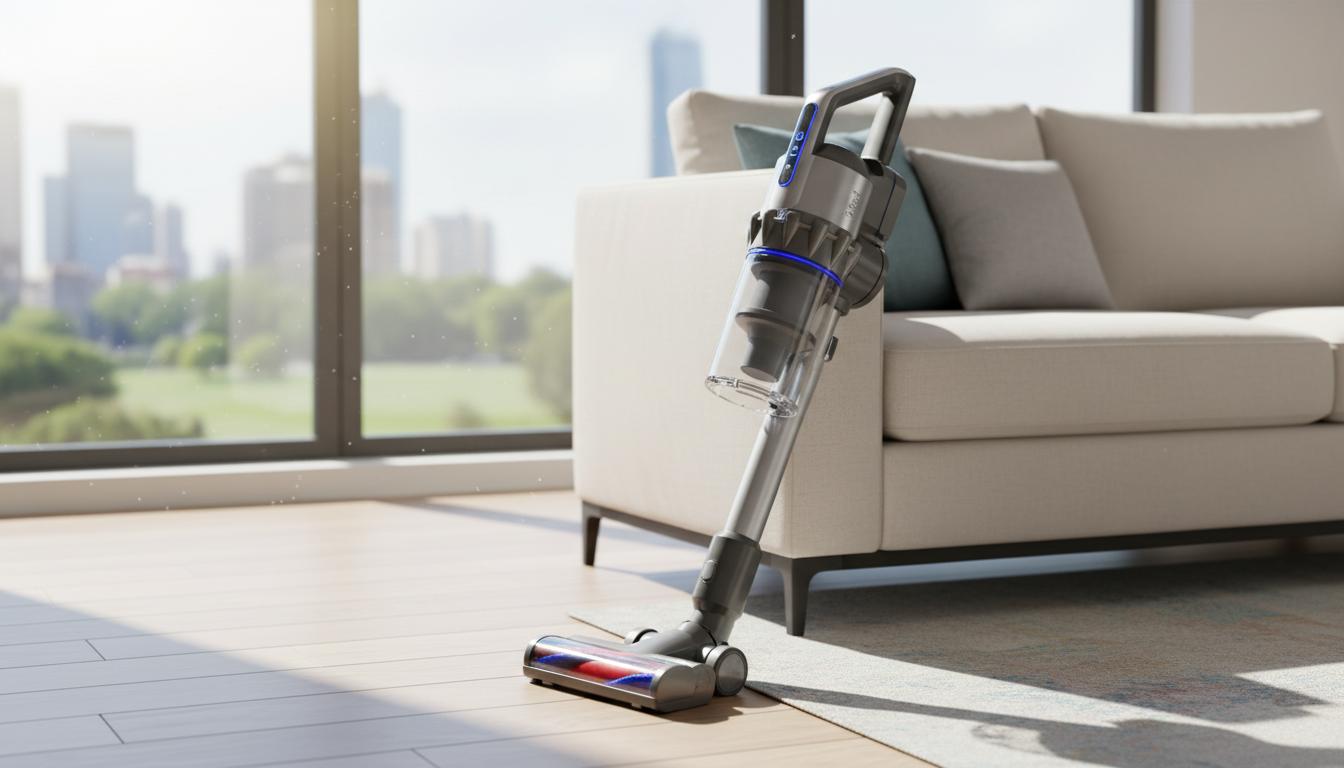
Sand from the beach, wet-weather mud, pet fluff, and wool carpet lint: New Zealand homes ask a lot from a vacuum cleaner. This guide explains what a vacuum cleaner is, how it works, which type suits your place, the real pros and cons, and how to choose and use one for cleaner floors and cleaner air.
What is
A vacuum cleaner is an electric appliance that uses suction and airflow to lift dust and debris from floors, rugs, upholstery, and other surfaces. It traps the mess in a bag or bin and filters the air before releasing it back into your home.
In New Zealand, most plug-in machines run on 230–240 V, 50 Hz power with an AS/NZS 3112 three‑pin plug. Cordless models use rechargeable lithium-ion batteries. You’ll see barrel (cylinder), upright, stick, robot, handheld, and wet & dry styles across retailers such as Noel Leeming, Harvey Norman, PB Tech, Bunnings, and specialist stores like Godfreys.
How it works
Inside every vacuum cleaner is a motor that creates a pressure drop. Air rushes in through the cleaning head, carrying dust along for the ride. The system then separates and stores that dust while filters strip out fine particles before the air exits.
Key parts and airflow
- Motor and fan: generate suction and airflow.
- Intake and cleaning head: where the dirt enters; may include a powered brushroll or soft roller.
- Separation: a bag or cyclonic chamber drops out heavier particles.
- Filtration: pre-motor and post-motor filters, often HEPA, catch the fine stuff.
- Exhaust: cleaned air returns to your room (or outside, for central systems).
Suction and performance metrics
- Air watts (AW): combines airflow and suction to indicate useful cleaning power at the head. Higher AW typically means stronger pick-up.
- Airflow: often measured in litres per second or CFM; important for dust transport.
- Vacuum (kPa): the pressure difference; helps with lifting heavier debris and deep-down dirt.
Note: Motor wattage (electric power draw) does not equal cleaning performance. A well-designed 800 W barrel vacuum cleaner can out-clean a poorly sealed 1600 W unit.
Brushes and floor contact
- Brushroll (beater bar): great for lifting hair and grit from carpet. Height adjustment helps protect wool fibres common in NZ homes.
- Soft roller: excels on hard floors, picking up fine dust without scattering.
- Combination heads: switch between bristles and hard-floor mode.
Filtration levels
- HEPA H13: captures 99.95% of particles at the most penetrating size (around 0.3 μm). Useful for hay fever and asthma sufferers.
- Sealed systems: reduce leaks so filtered air actually stays filtered.
Special cases
- Robot vacuums: use bump sensors, cameras, or LiDAR to map rooms and navigate around furniture.
- Wet & dry units: keep liquids away from the motor via a separation chamber and float valve. Only use when the machine is rated for wet pickup.
Types / examples
Different homes, different needs. Here’s how each vacuum cleaner type fits Kiwi life.
Common types
- Barrel (cylinder): a canister on wheels with a hose and wand. Examples: Miele Complete C3 (bagged), Numatic Henry (bagged), Bosch and Nilfisk models.
- Upright: motor and brush in the head, pushed like a lawnmower. Good for large carpeted areas.
- Stick (cordless): light, quick, and wall-mountable. Examples: Dyson V12/V15, Samsung Jet, Bosch Unlimited, Xiaomi/Roborock sticks.
- Robot vacuum cleaner: schedules daily runs and self-docks. Examples: iRobot Roomba, Roborock S8, Ecovacs Deebot.
- Handheld: small, ideal for cars, stairs, and crumbs.
- Wet & dry (shop vac): garages, workshops, utes, and renovations. Examples: Karcher WD series.
- Central vacuum: in-wall piping with a garage-located motor; exhausts outside. Common in new builds and renovations.
Quick comparison
| Type | Typical price (NZD) | Best for | Pros | Cons |
|---|---|---|---|---|
| Barrel (bagged) | $350–$900 | Mixed floors, allergies | Strong suction, quiet, hygienic bag disposal | Hose + canister to tow, ongoing bag cost |
| Barrel (bagless) | $250–$800 | General cleaning, budget | No bags, clear bin shows results | Dust plume when emptying, more filter washing |
| Upright | $300–$1,200 | Large carpeted homes | Deep carpet clean, wide head | Heavy, bulky on stairs |
| Stick (cordless) | $400–$1,500 | Quick daily tidy-ups | Lightweight, convenient, versatile tools | Limited runtime, battery wear, smaller bins |
| Robot | $600–$2,500 | Maintenance cleaning | Hands-off, schedules, auto-empty options | Misses corners, needs tidy floors, ongoing parts |
| Wet & dry | $150–$500 | Garages, DIY, spills | Liquids + debris, tough build | Loud, basic filtration unless HEPA-equipped |
| Central vacuum | $2,000–$4,000 installed | New builds, allergy control | Quiet, powerful, exhausts outside | Installation cost, fixed inlet locations |
Pros and cons
Benefits
- Cleaner air: a vacuum cleaner with a sealed HEPA system reduces fine dust, pollen, and pet dander.
- Faster cleaning: beats sweeping on hard floors, and lifts grit from deep in carpet.
- Better for wool: adjustable heads and gentle modes protect NZ’s common wool carpets.
- Convenience: cordless sticks and robots handle day-to-day crumbs and sand.
- Versatility: tools for sofas, cars, stairs, and mattresses.
Limitations
- Noise: typically 60–85 dB; uprights and shop vacs are louder.
- Maintenance: filters, bags, brushroll cleans, and battery replacements over time.
- Costs: premium models and robot auto-empty bases add up.
- Battery limits: cordless runtime can drop on “boost” modes.
- Not for everything: hot ash, plaster dust, and liquids (on dry-only models) can damage the machine.
How to use or choose
How to choose the right vacuum cleaner
- Floors and fibres: for wool carpet, pick a height-adjustable head or soft brush to avoid fuzzing. For hard floors, look for a soft roller and good edge cleaning.
- Allergies and asthma: aim for a sealed body with HEPA H13 filtration. Bagged barrel models are the easiest to empty without a dust cloud.
- Pets: get a motorised brush, anti-tangle combs, and strong air watts. Consider a turbo upholstery tool.
- Home size and layout: larger homes suit barrel or upright; apartments and townhouses love cordless sticks and robots.
- Runtime and charging: for cordless, 40–60 minutes on standard mode is practical. Swappable batteries are a plus.
- Noise: check dB ratings if you have young kids, pets, or close neighbours.
- Support in NZ: confirm bags, filters, and batteries are stocked locally. Warranty and the Consumer Guarantees Act back you if things fail earlier than reasonable.
- Weight and handling: try the machine in-store if possible; steering and lift feel matter more than specs.
- Budget: balance upfront price with running costs (bags, filters, power, replacement batteries).
Step-by-step: use a vacuum cleaner for better results
- Prep the area: pick up cords, toys, and small items. Move light furniture if needed.
- Set the head: choose carpet or hard-floor mode; adjust brush height to glide without grabbing.
- Start clean: empty the bin or fit a fresh bag if near full. Check filters are seated.
- Vacuum edges first: run the crevice tool along skirting and corners to free trapped dust.
- Work in lines: slow, overlapping passes; two passes in high-traffic zones like the hallway.
- Use the right tools: soft brush for blinds, upholstery tool for couches, mattress tool for beds.
- Finish and maintain: empty the bin outdoors or seal and bin the bag. Pick hair from the brushroll. Rinse washable filters and dry fully before refitting.
Care tips for Kiwi conditions
- Beach sand: do quick stick-vac passes often; deep-clean weekly with a barrel for grit in carpet base.
- Wet weather: never vacuum water unless your machine is wet-rated. Use mats at entries to cut mud load.
- Fireplace ash: only with a dedicated ash vacuum and when fully cold. Regular vacuums risk damage and fire.
- Renovation dust: plaster and concrete dust are harmful to standard machines. Use a wet & dry vacuum with a HEPA filter and bags.
- Power safety: use an RCD outlet for garages/outdoors. Don’t run long coiled extension leads with high-wattage vacuums.
- E-waste: when retiring a vacuum cleaner, use local e‑waste services or council drop‑offs so motors and batteries are recycled properly.
Spec sheet: what numbers actually help
- Air watts (AW): useful when comparing heads and sticks; 100–230 AW on boost is common in premium sticks.
- Filtration: HEPA H13 or better, plus a sealed body.
- Noise: under ~72 dB is quiet for a full-size vacuum cleaner.
- Bin or bag volume: bigger is better if you have pets or a large family.
- Battery: 25–30 V packs with 2.5–4.0 Ah capacity offer decent run times; detachable is ideal.
FAQ
What’s the best vacuum cleaner for wool carpet?
A barrel or upright with adjustable brush height and strong but controllable suction. Use a motorised head on low or medium power. For delicate loop pile, switch the brush off or use a hard-floor head.
Bagged or bagless—what’s better?
Bagged is cleaner and often better for allergies. Bagless saves on consumables and lets you see when it’s full, but empty outdoors to avoid dust clouds and wash filters regularly.
How often should I vacuum?
High-traffic areas: two to three times a week. Bedrooms and low-traffic areas: weekly. If you have pets or beach sand, short daily stick-vac runs plus a weekly deep clean works well.
Do I need HEPA?
If anyone in your home has asthma, hay fever, or dust sensitivities, yes—choose a sealed HEPA H13 vacuum cleaner or a central system that exhausts outside.
Is wattage a good way to judge power?
No. Wattage measures electricity used, not cleaning. Look at air watts, airflow, head design, and independent reviews. Try the head on carpet in-store if possible.
Can I vacuum liquids?
Only with a wet & dry vacuum cleaner. Standard vacuums are for dry use and may short, mould, or rupture filters if used on liquids.
Are robot vacuums worth it?
They’re great for keeping floors tidy between deep cleans, especially on hard floors and low-pile rugs. You’ll still want a stick or barrel for corners, stairs, and upholstery.
How do I maintain filters and bags?
Replace bags when they’re about two‑thirds full or when suction drops. Rinse washable pre-filters monthly and let them dry for 24 hours. Replace HEPA filters every 6–12 months, or as the manual advises.
What about noise?
Quiet full-size vacuums are in the high‑60s to low‑70s dB. Sticks and shop vacs can be louder. If noise matters, check the spec or test in-store.
Where can I buy parts in NZ?
Most brands supply bags, filters, and batteries through local retailers and online stores. Check availability before you buy; ongoing support matters more than a flashy launch model.
Bottom line
Match the vacuum cleaner to your floors, allergies, and routine. For most NZ homes, a solid bagged barrel plus a light cordless stick is a winning combo: deep clean on weekends, quick touch‑ups daily. Keep filters fresh, use the right head, and your floors—and lungs—will thank you.